
It's A Lock: MLB Hellbent On Sacrificing 2027 Season For A Salary Cap
If you were planing to do a tour of all 32 MLB parks in 2027 maybe you should tell your travel agent to pause before he presses BUY. The prevailing feeling a year out from the start of the 2027 season is that MLB owners are going to go full Gary Bettman in pursuit of a salary cap.
That’s the reason many contracts are scheduled to expire by the Dec. 1, 2026 deadline for the latest CBA. It’s why broadcasters are quietly assembling alternate programming to fill the weeks and months of a lockout, which is expected from owners to freeze all league business including trades and signings.
It’s nothing new. The obsession to get some sort of restraint on salaries has led to work stoppages in nine separate strikes/ lockouts to break the back of the MLB Players Association, formed in 1967 by the formidable Marvin Miller. Where NHL players caved and NFL players split between stars and regulars Joes, the MLB players never wavered. They paid a price for their successors.
None of the stoppages worked in MLB getting a cap. Still, the teams tried and failed, getting only a luxury tax as a result of shutting down seasons and losing hundreds of games to stoppages. Most notable to Canadians was the stoppage in mid-1994 that resulted in the now-defunct Montreal Expos losing a shot at the World Series.
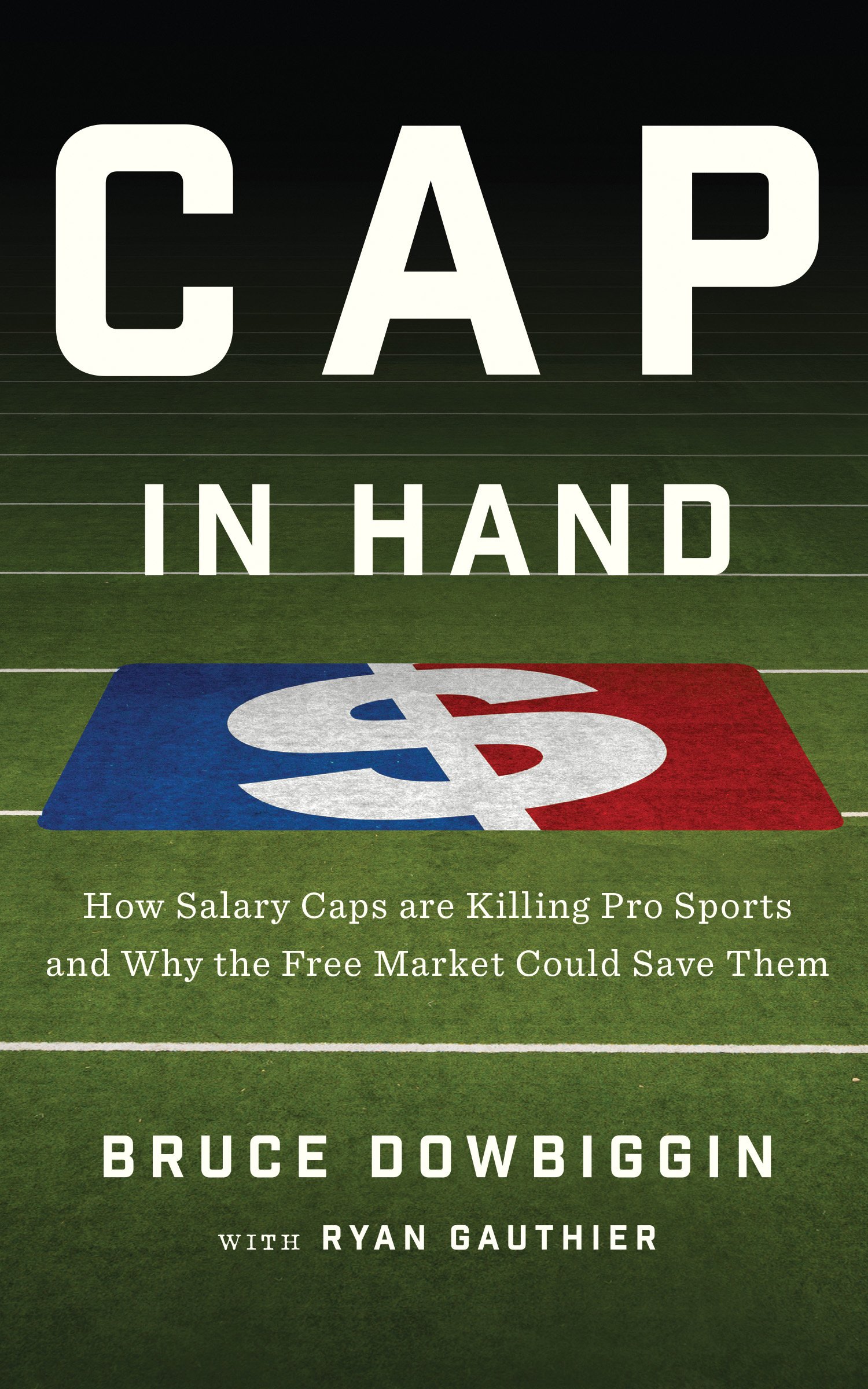
Where other leagues are bound by draconian cap rules and regulations MLB has used the luxury tax to govern its salary grid. We wrote about the evolution of this feud in our 2018 book Cap In Hand: How Salary Caps Are Ruining Sports (brucedowbigginbooks.ca/capinhand)
The problem for MLB (for all leagues really) is that caps can work when revenues are stable. The balancing act between small and large markets can be managed. But when new revenues come in, ballooning the difference between large and small markets, the rich are willing to pay the luxury taxes and upend the competitive balance caps allegedly provide.
George Steinbrenner’s New York Yankees teams were prime examples of spending to the hilt from 1980-2010. They used their advantage in cable TV to underwrite high-profile free agents and manage lopsided trades for stars. They were soon followed by a like-minded group of other large markets.
Still, smaller markets— unburdened by the salary cap floor constraining NHL teams— managed to win World Series for a time. But now the staggering new revenues from networks, cable TV, digital, logo rights and the betting industry have blown a gigantic hole in the cozy MLB competition. It is funding contracts that boggle the mind. They include Juan Soto's 15-year, $765 million deal with the Mets, Shohei Ohtani's 10-year, $700 million contract with the Dodgers, Mike Trout's 12-year, $426.5 million extension with the Angels, Aaron Judge's $360 million deal with the Yankees and Vladimir Guerrero Jr.'s $500 million extension with the Blue Jays.
They have corresponded with a time in which the World Series teams have come from the largest markets or from owners willing to underwrite the economic levers. You have to go back to the 2015 KC Royals to find a small-market winner and the 2020 Tampa Bay Rays as a Series finalist.
The latest arguments for salary caps is the World Series winning L.A. Dodgers—who’ve won three of the five World Series in which they’ve appeared since 2017— signing prime free agent slugger Kyle Tucker to a four-year, $240 million contract. (He’s reported to have turned down an even larger 10-year $300 million offer from Toronto). Added to the Dodgers already formidable lineup it seems unfair to baseball fans who still think fair is a concept in sports.
The problem that leagues hope a salary cap will address is how to have huge markets to compete will small markets in the same economic model. No one argues that Kansas City, Pittsburgh, Tampa or St. Louis are in the grouping of top teams. Were teams to allow open competition for talent— as soccer does to a large extent— you’d probably only have a 20-team MLB or an 18-team NBA.
But greedy owners want to bloat their leagues to 30 (MLB) or 32 (NFL, NHL, NBA) teams to capture the domestic and global marketing opportunities afforded by more teams. Their least concern is for fans who want to see the best but are fed watered-down competition.
After years of accepting the model of endless regular seasons followed by playoffs, fans have forced leagues into creating mid-season competition (4 Nations Challenge) or international events (Olympics, World Cups) to keep their massive inventory of in-season games relevant till playoffs. But owners would prefer to keep the old models going.
That’s why the 2027 MLB labour stoppage could go as long as two seasons should players stay together. (Two years was what former NHLPA director Bob Goodenow estimated in 2004 before his members turtled.) As strong as the MLBPA has been it’s hard to see global superstars like Ohtani and Soto putting on the hair shirt for long with hundreds of millions at stake for them. They do not emerge from the culture of loyalty Miller created 60 years earlier.
It will be a hard sell for players denying fans their sport. Fans would likely revive the “greedy players” rhetoric the owners feed them as a disincentive. (As if only owners should profit from new revenues.) The owners, meanwhile, are likely also counting on the pressure of broadcasters and sponsors who’ve invested billions in MLB to pressure players into surrendering a cap.
As well, the union and executive director Tony Clark are in the middle of a federal investigation into MLBPA finances that launched around May 2025. Any pursuit of a prosecution by the government could have a demonstrable effect on union leadership and, potentially, its positions in bargaining.
It’s a shame to shut down the sport at a time when baseball has improved its product substantially with a time clock, ABS and ghost runners for extra innings. So soak up what you can of 2026 and hope that sanity prevails before there 2027 season is lost.
Bruce Dowbiggin @dowbboy is the editor of Not The Public Broadcaster A two-time winner of the Gemini Award as Canada's top television sports broadcaster, his 2025 book Deal With It: The Trades That Stunned The NHL And Changed Hockey is now available on Amazon. Inexact Science: The Six Most Compelling Draft Years In NHL History, his previous book with his son Evan, was voted the seventh-best professional hockey book of all time by bookauthority.org . His new poetry collection In Other Words is available via brucedowbigginbooks.ca and on Kindle books at https://www.amazon.ca/dp/1069802700