
Upon Further Review: Why Soccer Is Onside With VAR Tech

For the millions who’ve discovered the FIFA 2026 World championships the past two weeks you’re entitled to ask “What in the name of Diego Maradona is offside, and why are they taking away all these goals with it?” To the initiated and uninitiated it seems that you can’t take a breath till you’ve seen whether the guy with the flag is ruining all the fun.
Welcome to Close Encounters Of The Sporting Kind.
The offside formula has been around almost as long as soccer/ football itself. Yet it flummoxes fans and players alike. The rule is simple. No player may precede the ball across the final line of defenders. In hockey terms, the offside line is like a moving blue line that defines offside. If you get there too early— even by an eyelash— your beautiful goal is kaput. Just ask Cristiano Rinaldo.
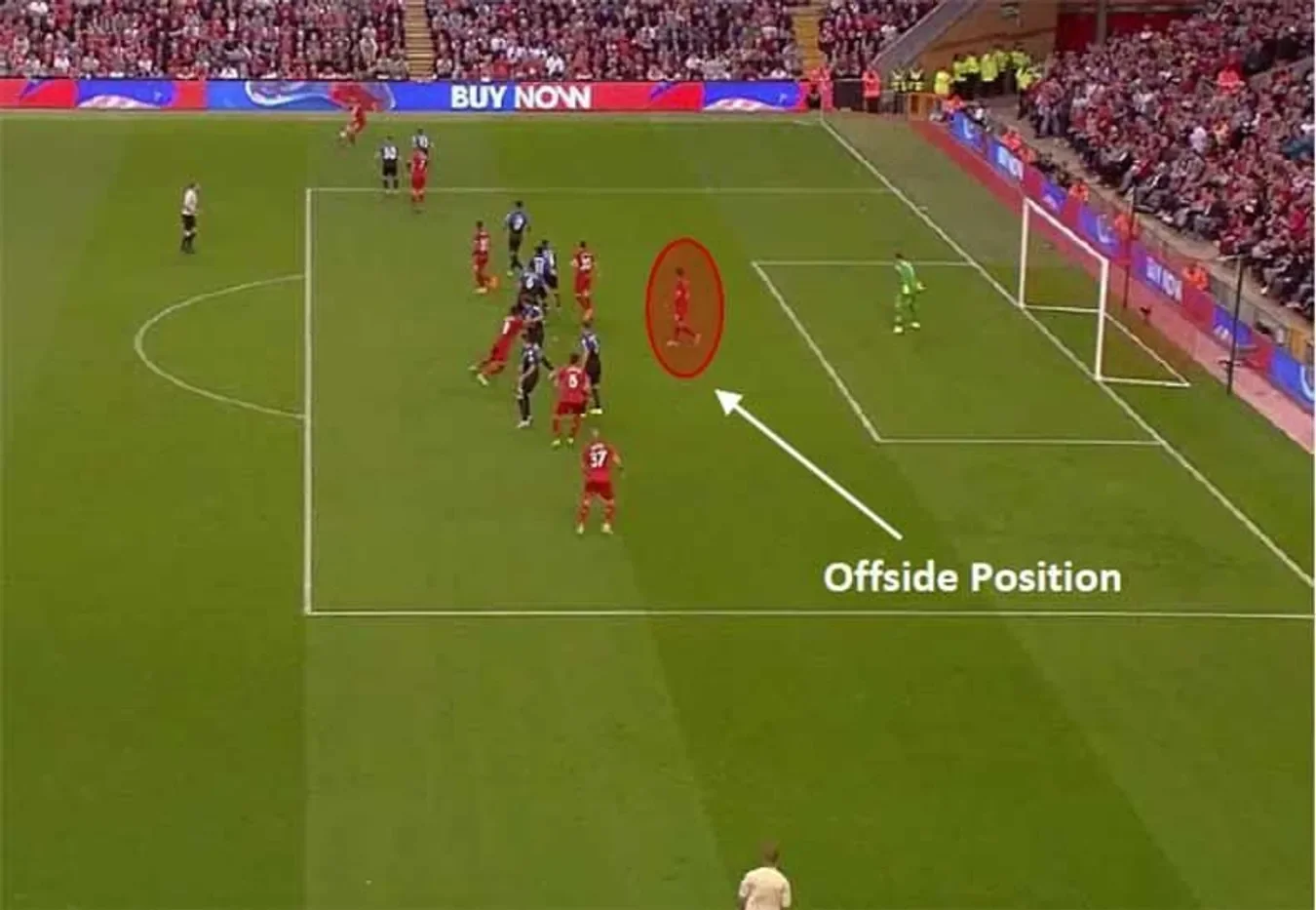
We’ve seen variations of all kinds as we head into the final eight teams. But the reaction is almost always the same, “Wha’ happened?” Now, there’s the new outrage wrinkle. The advent of VAR technology that is able to show precisely if a player is onside or not. Using a chip in the ball it can sense if the ball touches even a hair on a defender’s head as the scorer goes by. Just ask Luka Modric who’s Uruguay team lost a VAR tying goal with a second left in extra time— and was eliminated from the tournament.
It can also detect if the ball has fully entered the net. In the hot-white passion of the tournament the precision of the technology has eliminated factual arguments. That’s been replaced by tension between traditionalists and the modern set in soccer. “Can we have sorta’ accuracy?”
To anyone hearing these debates about the intrusion of video reviews and minuscule measurements in other sports it will all seem familiar. Whether it’s a ball/ strike in MLB or a TD in the NFL or an offside in the NHL, sweats urge leniency in the calls.”I mean we wanted video review, but not that kind of video review”.

Alas, once you go video you can’t go back to settling plays with an eye test . Especially with legalized gambling and fantasy sites paying you billions to guarantee the integrity of results. It was all supposed to go like tennis where the Hawkeye technology has eliminated the McEnroe tantrums about line calls.

Different sports have had different results. As we describe here , MLB has incorporated the ABS tech this season for allowing challenges to ball/ strikes. While pitchers like Detroit’s disappointing starter Framber Valdez claim the newnstrikes are erratic— “It has pushed men to pitch higher in the strike zone” — it seems to be working. Best of all, the system is fast. Only pitchers, catchers and hitters can employ it, and the decision to appeal must be made in three seconds, no looking at the dugout.
No wonder it has quickly become a favourite for cheering fans. Next year MLB hopes to introduce technology to determine if players have executed a complete swing at a pitch— always a contentious call. Should that work a robotic strike zone calling every pitch could be next. There will be complaints from old timers, but they are quickly disappearing.

Video challenges for outs on the bases, catches, baselines are sometimes tedious because they rely on camera angles, but the games move along. Why is this system important? Because it has allowed fans and players to see the came in greater detail. Result? Baseball is on a hot streak making their game better. The pitch clock, Shohei Ohtani, the ghost runner in extra innings, the expansion of the base sizes themselves, legalized betting and now ABS.
Hockey has had mixed response from its system which only relies on camera angles, not chips in the puck. The NHL’s experiments with using chips in the pucks have borne no fruit, but it has succeeded in developing offside tech that has led to a number of close calls eliminating goals. Pucks over the glass has a good record. Less successful is the tech to determine goals where players’ bodies and goalies pads obscure the overhead and rearview angles. Again, a working chip in the puck might solve this.
The NFL has been the least progressive of the major sports. While it has incorporated VAR tech to determine first downs, it still relies on referees’ eyesight to spot the ball. Calls on TDs at the goal line are similarly obscured by the dog piles of bodies blocking camera angles. The tedious reviews of catch-or-no-catch still satisfy few, but they’ve had more success using tech to determine fumbles.
Likewisde the NBA, a league that needs to speed up its fgamnes, is still reliant on camera angles to decide plays. But it all seems primitive in a world of robotics and chips that the league bringing in billions for its media rights can’t seem to solve the problems without a lengthy review of camera angles. Its probklwm is more the number of timeouts and reviews in the final minutes.
The only sure thing is that virtual offside calls, strike zones and hockey goals are the future. Its all just a matter of wghen.
Bruce Dowbiggin @dowbboy is the editor of Not The Public Broadcaster A two-time winner of the Gemini Award as Canada's top television sports broadcaster, his 2023 book Inexact Science: The Six Most Compelling Draft Years In NHL History, was voted a Top 20 greatest professional hockey books of all time by bookauthority.org . https://www.amazon.ca/dp/1770415300?linkCode=gs2&tag=uuid0a1-20 His previous book with his son Evan, Deal With It: The Trades That Stunned The NHL And Changed Hockey is now available on Amazon. His new poetry collection In Other Words is available via brucedowbigginbooks.ca and on Kindle books at https://www.amazon.ca/dp/106980270