
Does Claude Lemieux's Death Finally Get NHL To Take CTE Seriously?
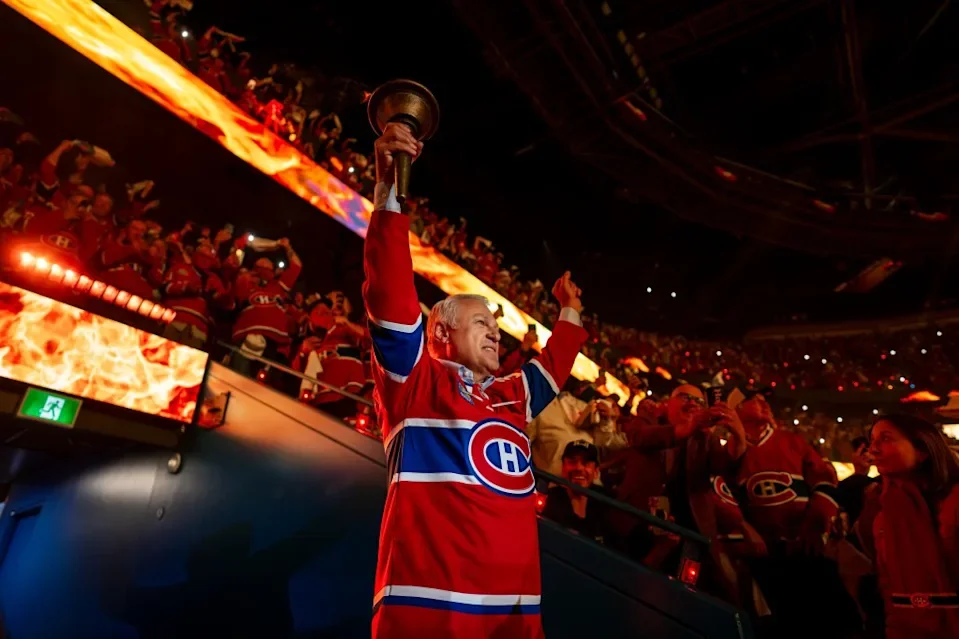
The news that former NHL player Claude Lemieux had taken his life shocked many— including those who barely knew of the 60-year-old four-time winner of the Stanley Cup. For those just discovering the tragic story, Lemieux was the featured carrier of “The Torch” before Game Three of the Montreal/ Carolina Eastern semifinal.
Televised images showed him overflowing with pride and excitement as the Canadiens crowd welcomed his entrance onto the ice surface at the Bell Centre. It was a great moment for a son of Quebec to feel the love of the Habs fans. Even though he played for six teams he was remembered as the dynamic upstart whose scoring led Montreal to the Cup in 1986 and the Final in 1989.
Lemieux— whose younger brother Jocelyn also played in the NHL— was also known as a fiery, take-no-prisoners competitor. Most hockey fans will recall his edgy, sandpaper style epitomized in the 1996 playoffs when, as a Colorado Rockies player, he brutally checked Detroit’s Kris Draper from behind, smashing his face on the boards. The act produced a vicious rivalry between the clubs.
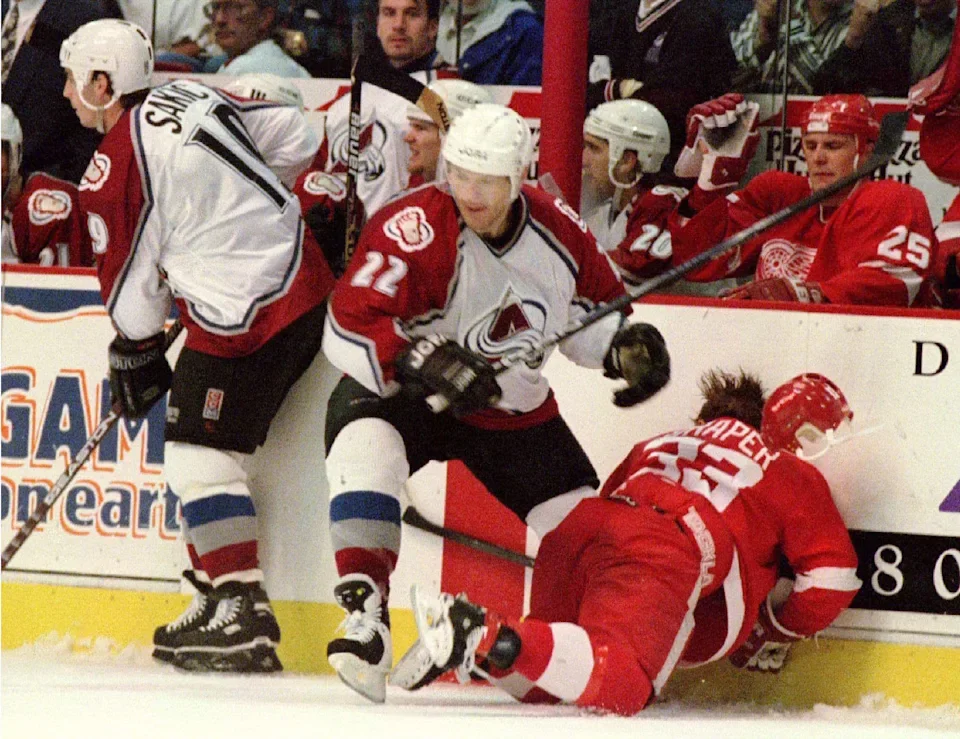
Symbolic of his nasty side, he and son Brendan (an NHL player himself) became the only father and son combination to be suspended for biting an opponent. But when he wasn’t driving opponents crazy, Lemieux was a prolific scorer, tallying 396 scores. It was in the playoffs, however, that he thrived. His 80 playoff goals are ninth-most in NHL history. He was at his best when the lights were bright in the spring.
After his playing career he went on the become a player agent. (Ironically one of his former clients Frederick Anderson, was the starting goalie for Carolina last Monday.) Those who knew him also recognized an artistic side. During CBC’s Battle of the Blades he skated with Canadian champion Shae-Lyn Bourne to a version of Leonard Cohen’s Hallelujah which he’d recorded himself. In retirement he was a frequent guest on hockey TV panels, valued for his honesty.
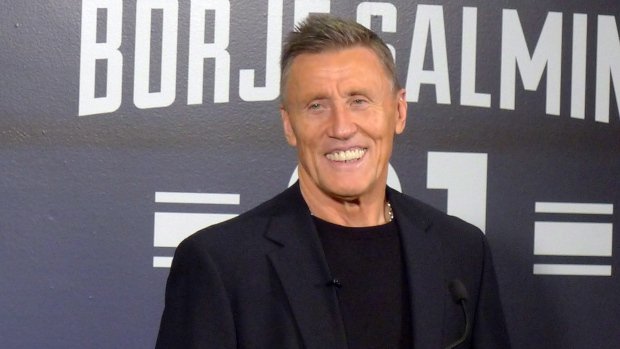
To many, Lemieux’s death so soon after a huge public recognition reminded them of Maple Leaf great Borje Salming’s farewell visit to Toronto in 2022. Terminally ill with ALS, Salming basked in the warmth of his former team and fans. Shortly after it was revealed the Hall of Fame defenceman had ended his life after leaving Toronto.
If he was controversial Meieux seemed to embrace his mixed reputation. Except when it came to being inducted into the Hockey Hall of Fame. Lemieux felt his accomplishments— especially in the postseason— warranted him getting a place at the Hall. Some in Quebec’s media are speculating that, after the tumultuous reception last Monday, his bitterness at rejection might have triggered his suicide in Florida days later.
[Sign up today for Not The Public Broadcaster newsletters. Hot takes and cool slants on sports and current affairs. Have the latest columns delivered to your mail box. Tell your friends to join, too. Always provocative, always independent.]
What many also thought when they heard the news was the possibility that “Pepe” was another victim of CTE, the brain condition suffered by so many athletes in contact sports. With that in mind, the family revealed Lemieux’s brain has been donated to @BU_CTE’s study at Boston University. “No conclusions should be drawn at this time,” advised his son Brendan, who discovered his father’s body in Florida.
Certainly Lemieux’s physical style in that era, combined with a greater incidence of NHL fighting in his career, would lead to suspicions about the effects on his brain. And as we noted in 2020, it would focus on the NHL’s Department of Player Safety and its passive approach to fighting and head trauma.
“We use the expression player safety advisedly, of course. Traditionally the NHL Department of Player Safety is to safety what Robespierre’s Committee of Public Safety was to justice. Just ask Paul Kariya. The brilliant Anaheim forward was crosschecked in the face by Gary Suter in 1998. Brian Burke, then deciding discipline for the NHL, gave Sutter just four games for the vicious attack. (He admits now that had he known the severity he’d have given more games.)
Kariya missed the 1998 Olympics and the rest of that season— and was never the same star again after suffering post-concussion syndrome for the fourth time. “If the league wants to stop that kind of conduct, it will have to punish players,” Kariya said at the time. “Ten-game suspensions ... and more, have to be brought back to help wake up players.” There was much noise at that time about agreeing with him. But it melted like ice in July.”
Fighting is the most high-profile example of brain risks in hockey. Even as the effects are known, NHL commissioner Gary Bettman continues to parse his words over ending the practice. It’s nothing new. As we wrote in February of 2022, “it needs to be pointed out that the NHL continues its own nonsense over brain injuries. Knowing what is known now the league still allows fit, powerful players to punch each other in the head over… no one is sure. If Don Cherry were still the measuring stick he’d say it’s about honour.
NHL commissioner Gary “The Good Doctor” Bettman somehow can say that the link between punching a man in the head and brain trauma is still unproven. He seems unaware that protecting the NHL’s sluggo past may make him popular with his owners, but sponsors and fans are no longer with him.”
It’s a scourge that populates the lower levels of hockey where ambitious young prospects still duke it out to prove how much they’ll sacrifice for a shot at the big time. Even last week, stories and ads showing players fighting at the Memorial Cup reinforced the primacy of fighting in the game’s culture.
As a player Lemieux walked the tightrope between competitive and reckless. It’s time the NHL stopped doing the same.
Bruce Dowbiggin @dowbboy is the editor of Not The Public Broadcaster A two-time winner of the Gemini Award as Canada's top television sports broadcaster, his 2023 book Inexact Science: The Six Most Compelling Draft Years In NHL History, was voted a Top 20 greatest professional hockey books of all time by bookauthority.org . https://www.amazon.ca/dp/1770415300?linkCode=gs2&tag=uuid0a1-20 His previous book with his son Evan, Deal With It: The Trades That Stunned The NHL And Changed Hockey is now available on Amazon. His new poetry collection In Other Words is available via brucedowbigginbooks.ca and on Kindle books at https://www.amazon.ca/dp/106980270