
How Fantasy Sports Ruined Rooting For the Home Team

Across North America this month thousands will sit down for an annual rite of passage, the preseason Fantasy baseball Draft. There are many versions of these baseball drafts, each with its own calculus (single-season leagues) and history (perpetual leagues). Scoring formulas can be simple as adding home runs and RBIs or as algorithmic as a stock-market play.
The format can be a snake draft or a mirror draft. The names of teams are fanciful or straightforward. Ohtani-Wan Kenobi, Harper’s Bizarre, Acuña Matata, Soto Speak. Trading and drafting are a constant source of debate and teasing. While the money got from winning is important, bragging rights are even more cherished.
At the same time hockey fans will also assemble for another tradition, the NHL playoff pool. Groups of friends and chains of strangers will sit down together— or online— to select teams of random playoff performers. No Canadian team can win the Stanley Cup? So what, if you win your fantasy pool. Like baseball Fantasy teams these puck pursuers are dedicated to their systems and their lore.
NFL Fantasy leagues are also prodigious as the fall season approaches. No doubt NBA fans will likewise parse their sport for fantasy purposes in postseason pools as well. All geared to enhancing watching your favourite sports through the championship season.
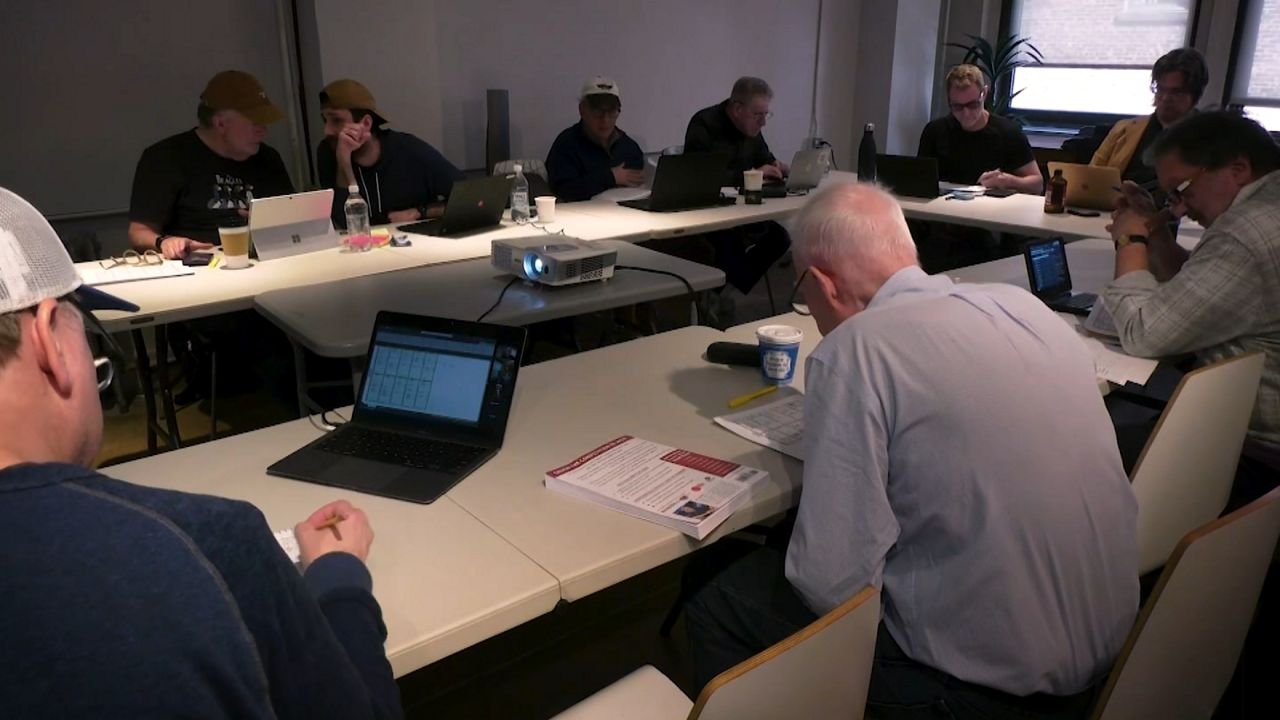
What is beyond doubt is that the Fantasy sports phenomenon— inculcated by the famed NYC Rotisserie league onvented by sports journalists in the 1970s— has re-invented how sports is perceived and consumed by North Americans fans. From a diversion for sports nerds to enhance their fandom it has grown to today’s multi-billion-dollar legal sports betting universe than blankets the broadcasts and dominates the internet.
Where in the past there was only one’s favourite team, today’s sports fans monitor multiple pick-up teams on a number of platforms. Water-cooler talk is now peppered with happy discussions of how Aaron Judge or Connor McDavid racked up a big night against your sentimental childhood squad. The notion of absolute fandom was shattered forever. Insider information became the lingua franca. Those of us in the sports media were gurus to thousands with our own picks and parlays.
The revolution began shortly after Roto sports became a cult hit in the 1980s. Soon, the rules and regulations governing Fantasy were heard at dinner parties and dives. Everyone from judges to Wall Street hustlers to Hollywood luminaries was in on it. “Who’s your number one draft pick, Bonds or Maddux?”
While gambling had always existed in the criminal underground and in above-board NCAA basketball pools, the appetite grew for the middle-class sports fan to profit from his/ her obsessive appetite for sports. But outside of Las Vegas, there was no legal sports gambling in North America. (Europe and Asia have long had legal sports gambling)
Leagues mortified at the thought of games being fixed pressured Congress and Parliament to halt any incursions into using their results for gambling. The first major attempts to successfully circumvent this monolith were quasi-betting pools such as Draft Kings and FanDuel who created daily “pools” where fans could assemble teams for that day. Winners were based on one-day production. Prize pools were divided among winners.
The formula spread to just about every sport from golf to auto racing to soccer. Algorithms based on successful business investing schemes were developed. The sports TV networks noticed. Soon, there were shows dedicated strictly to the craft and culture of “who my backup third baseman should be” or what prospects were on the horizon for wily GMs to pick from.
The networks did not go so far as to insert any of this into their coverage of games live, of course. It was all euphemisms and wink-wink from folks such as Al Michaels or Brent Musberger. While the pressure to make sports gambling legal in the U.S. and Canada built steadily though court cases and government bills, they played hear no evil/ see no evil. Like Pravda or Tass they were censoring the reality everyone saw around them.
But it was a losing proposition. The leagues they covered saw an obscene amount of profit from pairing with the corporations that ran gambling. The advent of proposition betting further primed the pump. Needing money to pay the sky-rocketing price of superstar talent teams and leagues saw arms-length gambling as a solution. Don’t take money from betting, Take it from there people who run betting.
Early in the century the dam finally broke for gambling with Supreme Court decisions that paved the way for, now, 40 American states to allow sports betting. Of them 32 allow online or apps for betting. While sports betting is legal in Canada, so far only Ontario has a fully competitive private industry. Individual provinces operate their own systems and many offshore online sites are accessible. (Alberts is ready to allow private competition in 2027.)
Thus, online touts and info are blanketing sports content with pop-up odds or banner ads running under the action itself. Traditionalists are horrified by this incursion, but it’s clear there’s no getting this tooth paste back in the betting tube. As seen by the high-profile cases of Shohei Ohtani’s translator or the point-shaving of former Toronto Raptors this has also not made sports gambling foolproof.
But it’s too late now. Newer sites such as Kalshi and Prophet X allow you to bet on any prop or sport. Dedicated betting internet sites go 24/7 to guide live in-game betting. Cash-strapped governments needing tax revenues are opening up the sluice gates.
“Root-root-root for the home team”? Never going back.
Bruce Dowbiggin @dowbboy is the editor of Not The Public Broadcaster A two-time winner of the Gemini Award as Canada's top television sports broadcaster, his 2025 book Deal With It: The Trades That Stunned The NHL And Changed Hockey is now available on Amazon. Inexact Science: The Six Most Compelling Draft Years In NHL History, his previous book with his son Evan, was voted the seventh-best professional hockey book of all time by bookauthority.org . His new poetry collection In Other Words is available via brucedowbigginbooks.ca and on Kindle books at https://www.amazon.ca/dp/1069802700