
The Eyes Have It: How The New ABS System Has MLB In The Zone
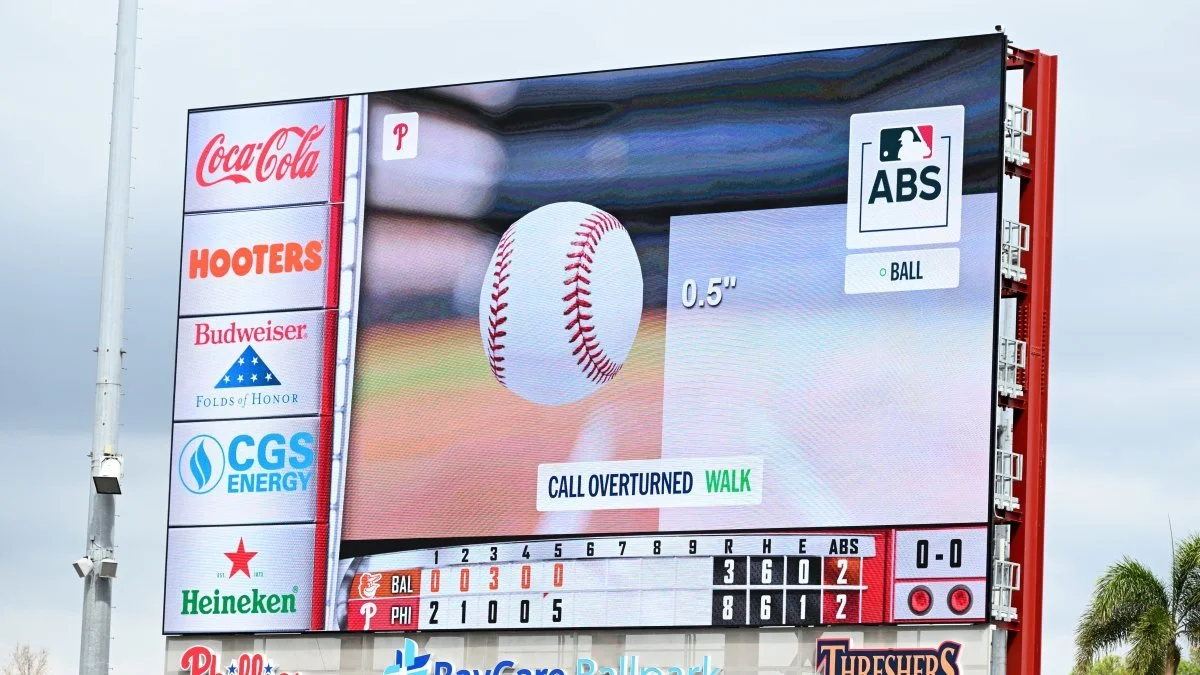
In the age of Ozempic, MLB has found another way to shrink people. Without artificial drugs. Just introduce the Automated Ball/ Strike (ABS) system and watch those inches melt away on players.
Take All Star 3B Alex Bregman now of the Chicago Cubs. In the past three years Bregman's has had three teams. His also has three different heights, shrinking from 2024: 6-foot-2/ to 2025: 5-foot-11/ to 2026: 5 foot-10.
Then there’s Gavin Lux of the Cubs. He has somehow gone from 6-foot-2 as a Cincinnati Red in 2025 to 5-foot-10 playing 2B for the 2026 Tampa Bay Rays.
Connor Wong of the Boston Red Sox has likewise played Honey I Shrank The Second Baseman. Wong has gone from 6-foot-2 in 2025 to 5-foot-10 in 2026.
And there are more. How is this being done? What does ABS have to do with it? Glad you asked. As part of its ball/strike challenge system, MLB wants precise measurements for every player in 2026— the better to create an accurate strike zone for those players who wish to challenge an umpire’s vision.
(The fine print: The current strike zone sits between 27 percent and 53.5 percent of the player’s height, according to MLB.com. Everyone has a customized vertical zone. It is the same width for all players however.)
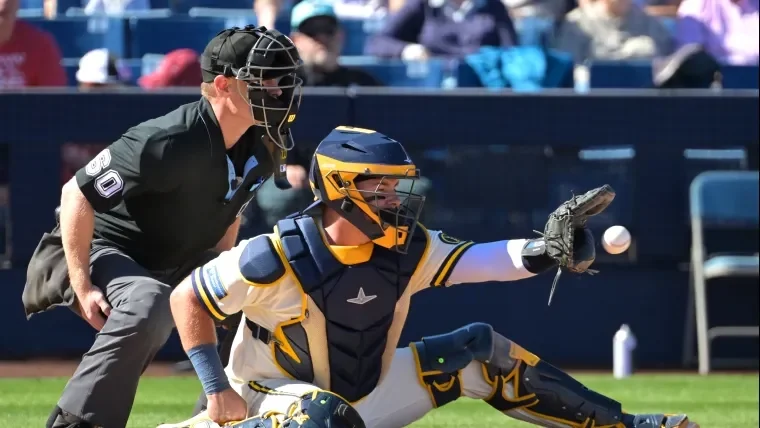
MLB visited camps this spring to get accurate numbers on everyone. So between 10 AM and noon (you shrink as there day goes on) they got players in stocking feet, heels together, knees exposed, backs against the wall to record their vitals.
Now, if you are a player you might want to get a lower height. It shrinks your strike zone to your advantage— like that enjoyed by 5-foot-5 Jose Altuve of the Astros. The last thing you want is a strike zone the size of 6-foot-8 Aaron Judge of the Yankees. Already in the first week of the season fans have seen the impact as batters and catchers have employed the ABS measurements.
So far, umps have had mixed results. Veteran ump C.B. Bucknor has six overturned challenges so far, including two on consecutive pitches, on Saturday. Others have had a clean slate. Projecting the results for the regular season, based on spring-training data , the success rate for ABS challenges will be 53 percent .
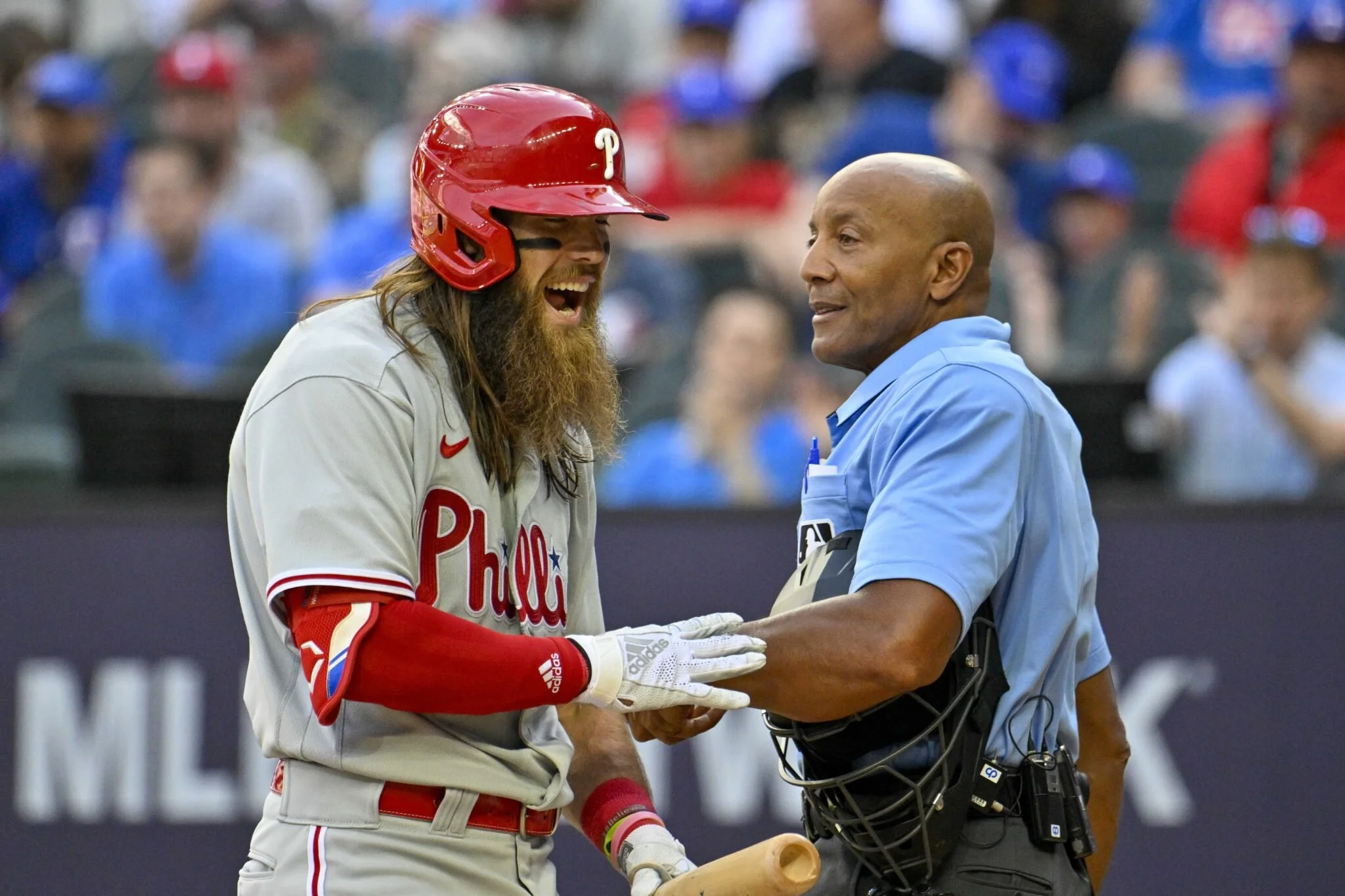
Best of all, the system is fast. Only pitchers, catchers and hitters can employ it, and the decision to appeal must be made in three seconds, no looking at the dugout. No wonder it has quickly become a favourite for cheering fans. Next year MLB hopes to introduce technology to determine if players have executed a complete swing at a pitch— always a contentious call. Should that work a robotic strike zone calling every pitch could be next.
Why is this important? Because baseball is on a hot streak making the game better. The pitch clock, Shohei Ohtani, the ghost runner in extra innings, the expansion of the base sizes themselves, legalized betting and now ABS. Plus, they have had some terrific World Series recently.
As well, Venezuela’s win in the World Baseball Classic final was the most-watched game in WBC history— more than doubling the viewership (4.48 million) of the 2023 final. Last fall, Fox recorded its highest average World Series viewership (15.7 million) since 2017, propelled by global superstar Ohtani and the Dodgers beating Toronto, and exceeding the seven-game average rating of the 2025 NBA Finals (10.2 million).
And Toronto’s drive to within one win of the World Series set Canadian records for ratings and streaming, too. It’s moved The Athletic to ask, “Has MLB overtaken the NBA as America’s No. 2 league?”
That’s a big comeback from the early part of the decade when MLB took the All Star game away from Atlanta and gave it to Denver to placate radicals complaining that the state of Georgia had adopted new “Jim Crow” voting laws. As we wrote in April 2021, announcers were cautioned not to mention “the subject of the move meant to placate black militants and their corporate Gepettos by transferring the game from a city with 50 percent black population (Atlanta) to a city with nine percent black population (Denver).
Or that the Democratic Party that urged this move realized— too late— that the move would devastate black businesses in Georgia disproportionately. In their plucky praise for costing Atlanta an estimated hundred million in business impact the talking heads were instructed not to cite President Joe Biden’s hyperbolic comparison of Georgia’s democratic voting law to Jim Crow.
It will be all sweet diversity as MLB commissioners Rob Manfred pretends that he acts independently of sponsors such as Delta and Coca Cola who yanked his strings.
Despite MLB’s pretensions to a national platform baseball has become a regional sport in 2021, defined by strong rivalries but absent any compelling national voice. While there are wonderful players like Mike Trout and Mookie Betts, none have a national profile à la LeBron or Tom Brady. Its population base is greying at a rapid clip.
The slow-moving sport had earlier been saved from obscurity in the late 20th century by its early adoption of fantasy sports (Rotisserie baseball etc.) and its development of sports analytics via the stats pioneer Bill James. But now, as the pandering to politicians on Georgia voting proves, it’s floundering to find a voice with younger Woke fans.”
If The Atlantic is correct MLB might just have rescued itself from self-imposed destruction five years ago. Who knew that all they had to did was call the balls and strikes correctly.
Bruce Dowbiggin @dowbboy is the editor of Not The Public Broadcaster A two-time winner of the Gemini Award as Canada's top television sports broadcaster, his 2025 book Deal With It: The Trades That Stunned The NHL And Changed Hockey is now available on Amazon. Inexact Science: The Six Most Compelling Draft Years In NHL History, his previous book with his son Evan, was voted the seventh-best professional hockey book of all time by bookauthority.org . His new poetry collection In Other Words is available via brucedowbigginbooks.ca and on Kindle books at https://www.amazon.ca/dp/1069802700