
Brokeback Zamboni: How "Heated Rivalry" Challenges The NHL's Unspoken Secret
We talked with our friend, fellow author Jim Malner (Big League, Royal Box), about sports books. He asked, “What are the most popular hockey books of all time?” Jim was asking, because he’s one of the very few sports action fiction authors. Our first guess was Ken Dryden’s The Game. Wrong. Or Theo Fleury’s Playing With Fire. Nope. We won’t go through all the other guesses, except to say they were wrong, too.
The answer, said Malner, is hockey romance fiction. Bodice rippers such as Wicked Games, bestselling author Maureen Smith’s “sizzling new interracial romance series featuring four sexy-as-sin hockey players who lose their hearts on the road to winning the Stanley Cup…” Don’t worry, there’s many more where that came from.
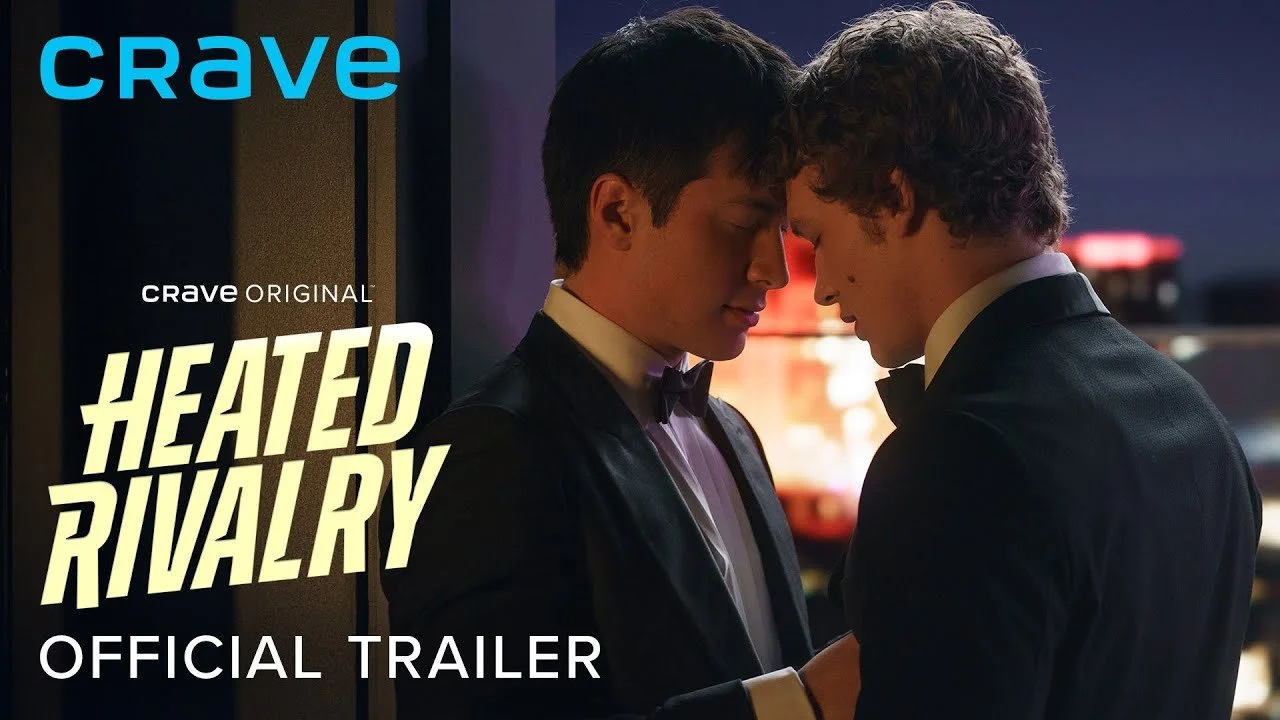
The books sell like hotcakes. We bring this up because of the kerfuffle over Rachel Reid’s Heated Rivalry, now a movie showing on Disney, HBO Max and Crave. It’s a hockey saga about two beautiful people—one Russian, one Canadian— brought together in desire. The kicker? Both are male hockey rivals . Yes, a gay hockey theme. Brokeback Zamboni. And, says the New York Times, “Since its Nov. 28 debut, fans have gone back to devour the books — “Heated Rivalry” is the second of six steamy romances in Rachel Reid’s Game Changers series — outpacing supply and forcing Harlequin, the publisher, to play catch-up.”
Harlequin has now reportedly sold more than 650,000 books in the Game Changers series. Well, then… (Ironically, Heated Rivalry is a production of Jacob Tierney who’s also part of the alpha male comedy Letterkenny.) In almost every realm outside male sports and the priesthood this might be ho-hum. But in men’s hockey? The NHL? The omertà on LGBTQ content is the same as it was in the days of Rocket Richard and Gordie Howe. It’s stunning that in the 50 years since gay came out of its closet no active NHL stars have taken the opening. Nor has anyone in the LGBTQ community outed anyone famous. Crickets.
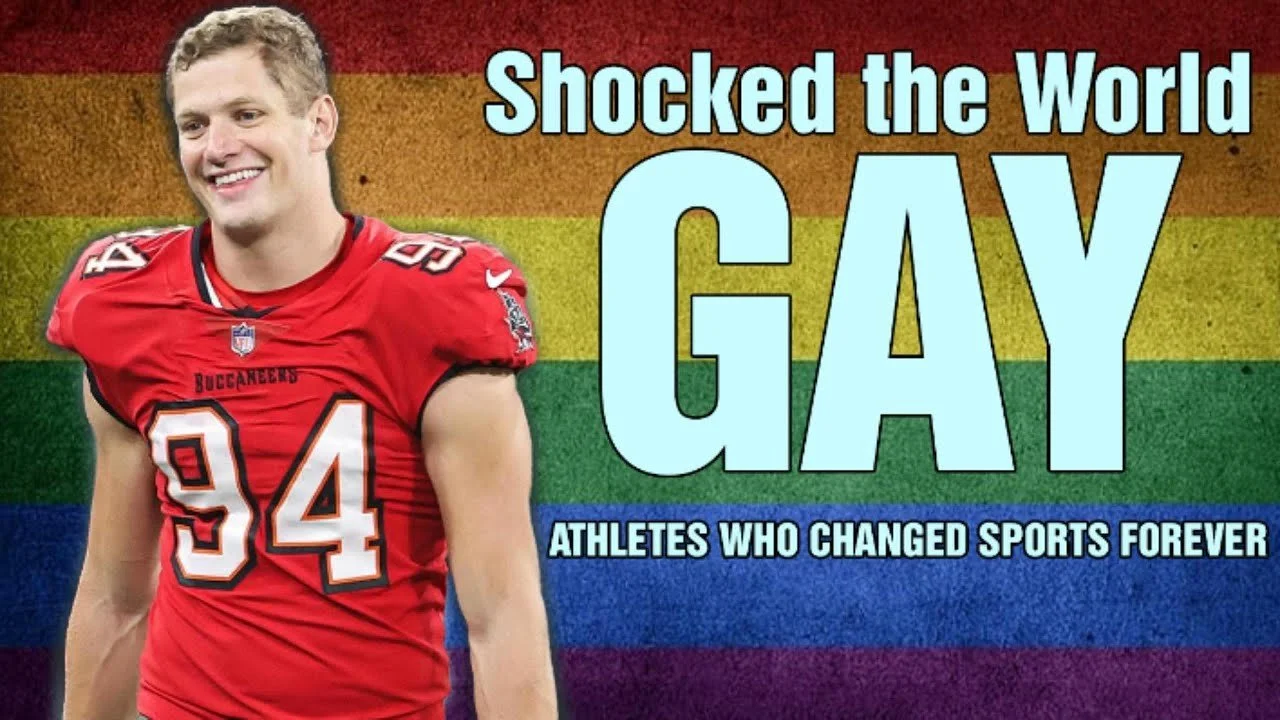
Across all sports a few prominent stars came out as LBGTQ (Bruce Jenner, Carl Nassib, Jerry Smith, Jason Collins), but during the prime of their careers? Forget it. We have often written on this sexual tension in sports (lately Caitlyn Clark vs. the WNBA lesbian culture) but rarely putting names to it in sports. And almost never male names.
In 2019 we did a column about Blue Jays announcer Scott McArthur coming out with all the same questions we had then. “While other segments of the world have adjusted themselves to the notion of LGBT, you wouldn’t know it in the dressing rooms where MacArthur works— and where he will now likely face some reluctance in acknowledging the reality of an openly gay man in their inner sanctum.
MacArthur knows this, which made his coming out a serious issue in how he does his job. And a bold statement. Baseball dressing rooms— like NHL, NBA and NFL dressing rooms— are a cross-section of many cultures. Latin, black, Asian and white players work side by side. But the idea that they agree about much beyond winning is a fabrication.
Many of the men he covers come from conservative religious cultures. Others from macho cultures that abhor homosexuality. (The inability of presidential aspirant Pete Buttigieg, who is openly gay, to attract even a tiny portion of Democratic black voters is just one symptom of that cultural resistance.) Few of them will give MacArthur props for his decision— in the public sphere, at least.
MacArthur will now be judged in a different vein as he travels with the team and works in the change rooms. There isn’t much dressing-room “intimacy” anymore— players don’t shower or dress in the open, and are rarely seen naked as in the past. Women reporters forced that change.
But the motto of “what happens here, stays here” remains. And that includes who is sleeping with whom.
With so many other distractions— salary, playing time, promotional apperances— teams have discouraged any domestic dramas in rooms that threaten unity. The few that have surfaced— the Gary Leeman/ Al Iafrate conflict in Toronto in the 1980s comes to mind— are strictly heterosexual. And poisonous to team unity.
Homosexual relations are still taboo. And there doesn’t appear any cultural or legal framework that will challenge that soon.

Which puts them at distinct odds with the women in sports. As the U.S. women’s soccer team showed, women’s sports are very liberated from the conservative standards of men’s sports. Led by the ubiquitous Mega Rapinoe, women are open about their homosexuality. They flaunt it. You can’t swing a cat without hitting a lesbian in a women’s sport.
There are couples on the same team and married couples on opposing squads. Canadian hockey star Gillian Apps married rival American player Meaghan Duggan . While the subject of intramural liaisons is taboo in mens’ sport, the drama in women’s open dressing rooms is a real thing. It can be manifested in any manner of bondings— straight on straight/ lesbian on lesbian/ bi with any of the above.
Who wouldn’t be enthralled to hear from modern coaches on the balancing acts they perform amidst jealousies, fights and distractions brought on by the recognition of romance between the players? How do they keep team unity in the face of a public split between line mates or defence partners? I know I would.
But, amidst the media’s sexual liberation theology on everything else, there is a distinct lack of coverage of how unique team building is in women's sports. Why? As the soccer players showed, the athletes are quite willing to discuss it. Some want to shout it from the roof tops.
Or is it that a media that acts so brave in blaming “the patriarchy” for everything that goes wrong is reluctant to report anything tnegative hat might makes the LGBT women look unfavourable or emotional?”


Virtually nothing has changed in men’s sports since that writing. Perhaps Heated Rivalry will encourage someone to come out while playing mens’ team sports. Maybe gay NFL cheer leaders will have some effect. Till then it will remain— in the words of that old cliché— the subject that dare not speak its name in men’s sports. dressing rooms.
Bruce Dowbiggin @dowbboy is the editor of Not The Public Broadcaster A two-time winner of the Gemini Award as Canada's top television sports broadcaster, his 2025 book Deal With It: The Trades That Stunned The NHL And Changed hockey is now available on Amazon. Inexact Science: The Six Most Compelling Draft Years In NHL History, his previous book with his son Evan, was voted the seventh-best professional hockey book of all time by bookauthority.org . His new poetry collection In Other Words is available via brucedowbigginbooks.ca and on Kindle books.